
SyQon
Daniel Paull

Daniel Paull

This user hasn't added a bio yet.

8 RepReputation measures community trust. It increases when other members upvote your threads, comments, or gallery images, and decreases when those contributions receive downvotes.
2 Connected
6 Images
Joined 18 days ago

Cosmic Gallery

From The Cosmic Treasure Chest
From The Cosmic Treasure Chest

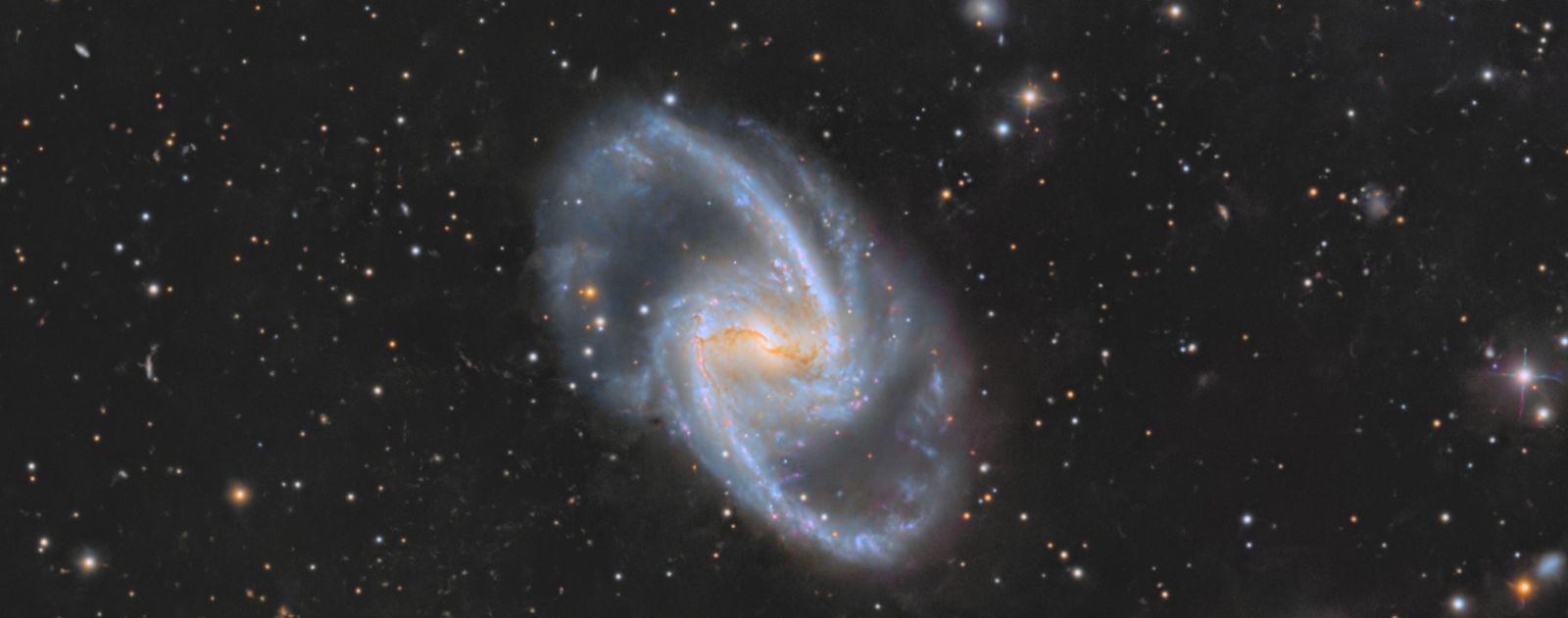
NGC 1365
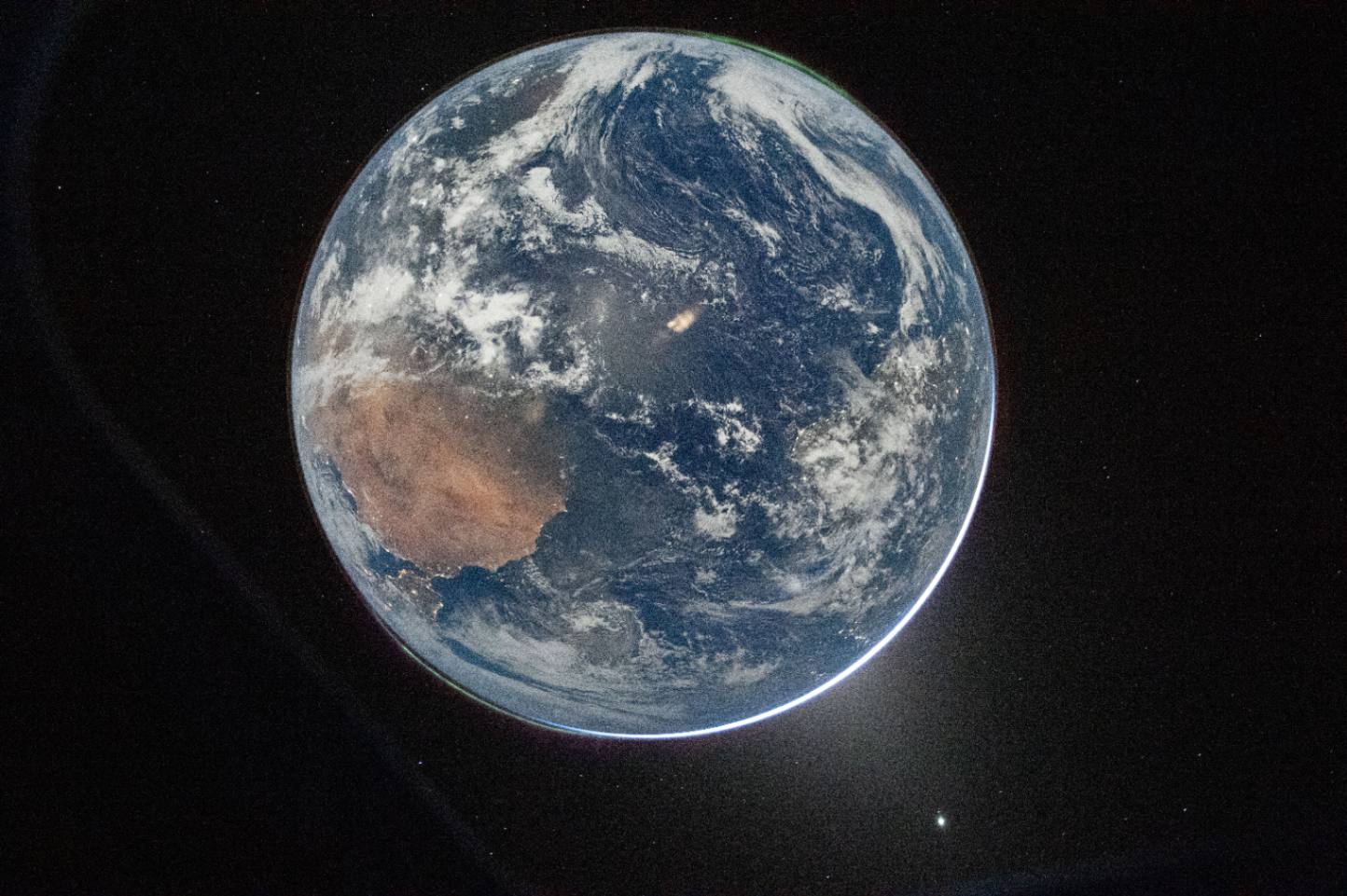
NGC 1365

art002e000192

art002e000192

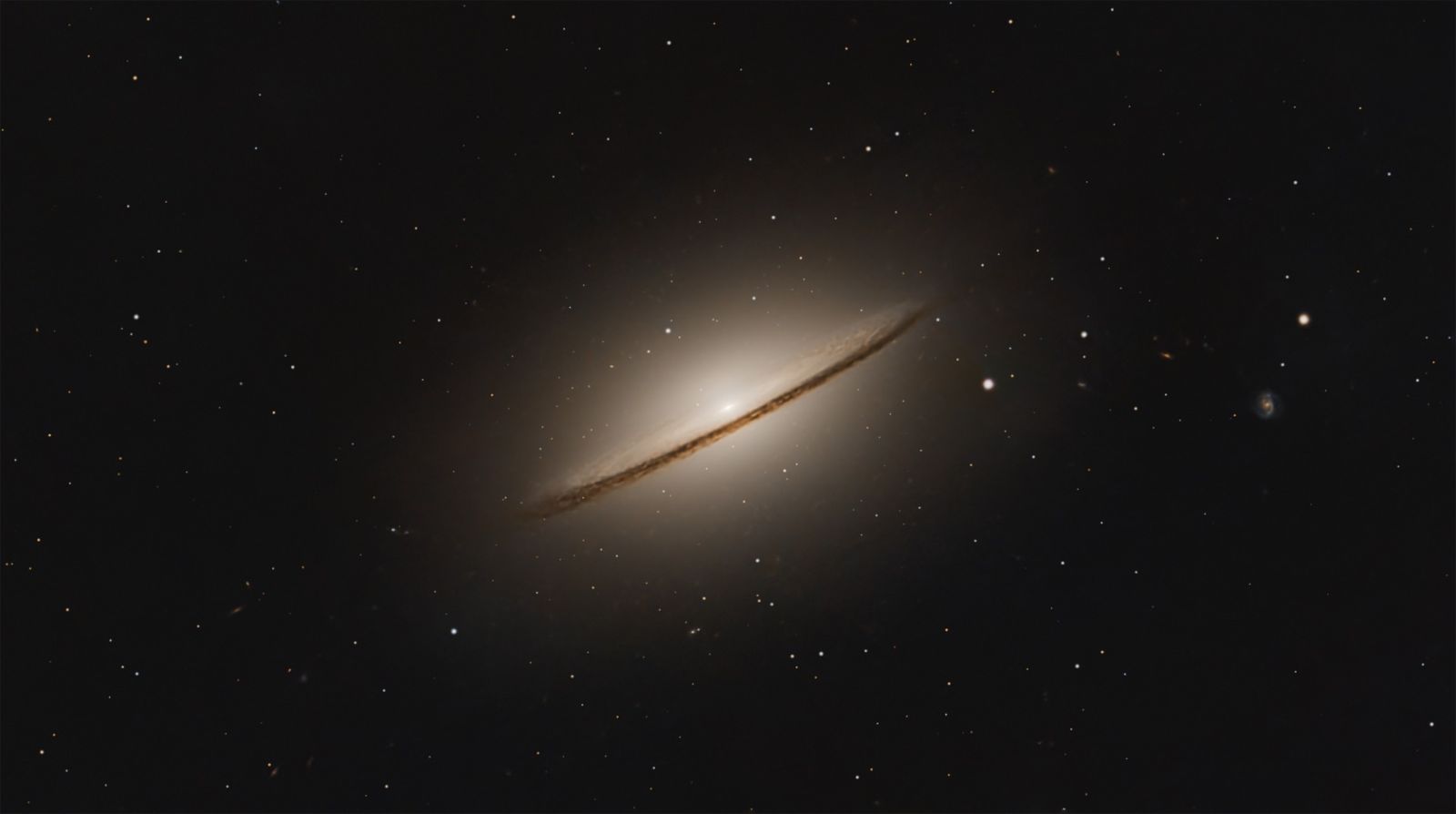
The Sombrero Galaxy

The Sombrero Galaxy

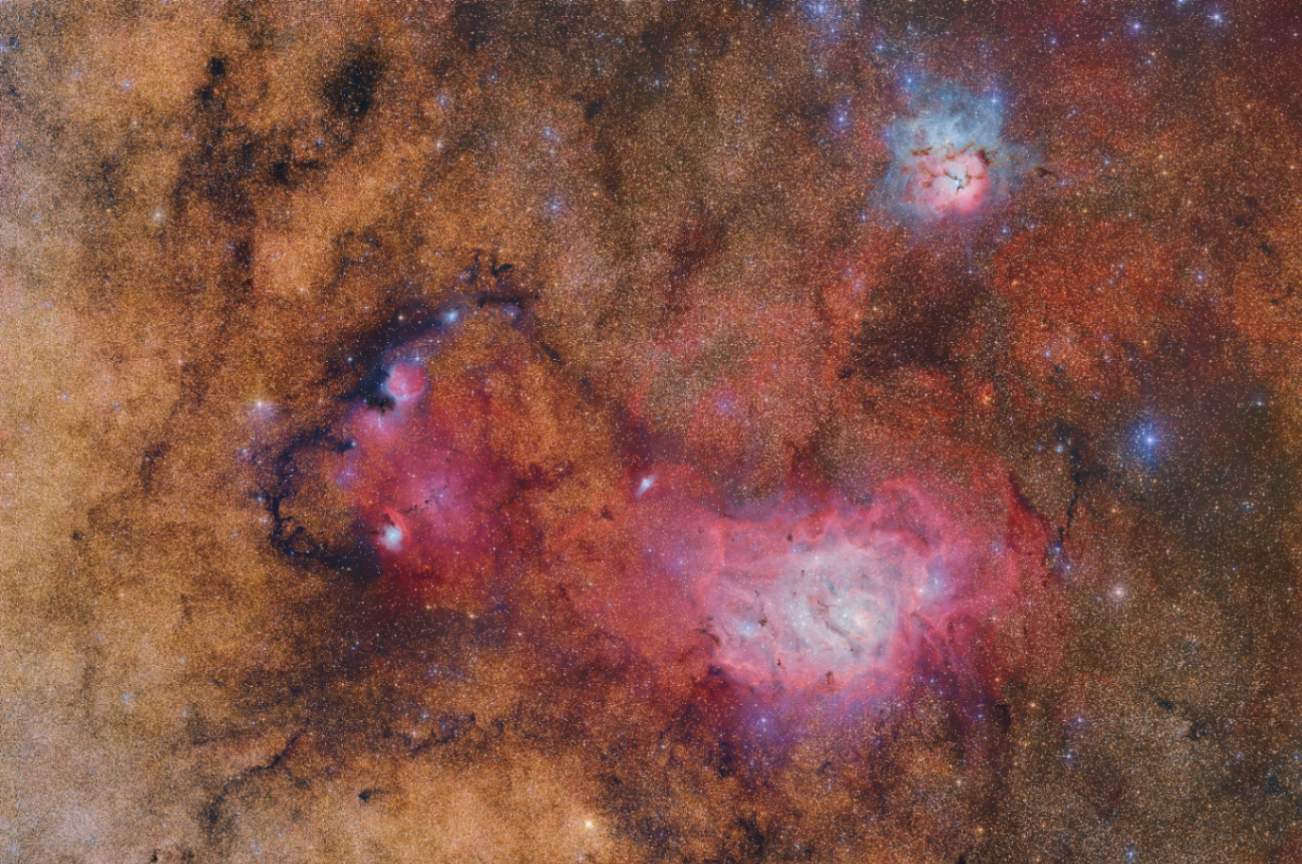
This *wide-field* _mosaic_ captures the Lagoon and Trifid Nebulae, two prominent star-forming regions in the constellation Sagittarius, located roughly 4,000–5,000 light-years from Earth. The Lagoon Nebula (M8), visible toward the lower right, is an active region of star birth marked by glowing hydrogen gas, dark dust lanes, and embedded young star clusters. Above it lies the Trifid Nebula (M20), a complex object combining emission, reflection, and dark nebulae within a single field.

The surrounding region is rich in faint emission and dust, including the H II region Sharpless 2-54, sometimes referred to as the “Chinese Dragon,” along with extensive dark molecular clouds that thread through the Sagittarius arm of the Milky Way. The dense star field reflects the direction of the Galactic center, with stars spanning a wide range of distances and colors.

The image was assembled as a four-panel mosaic using a fast wide-field optical system, allowing both the nebulae and the surrounding stellar environment to be captured at high resolution while preserving natural star color and fine structural detail across the field.
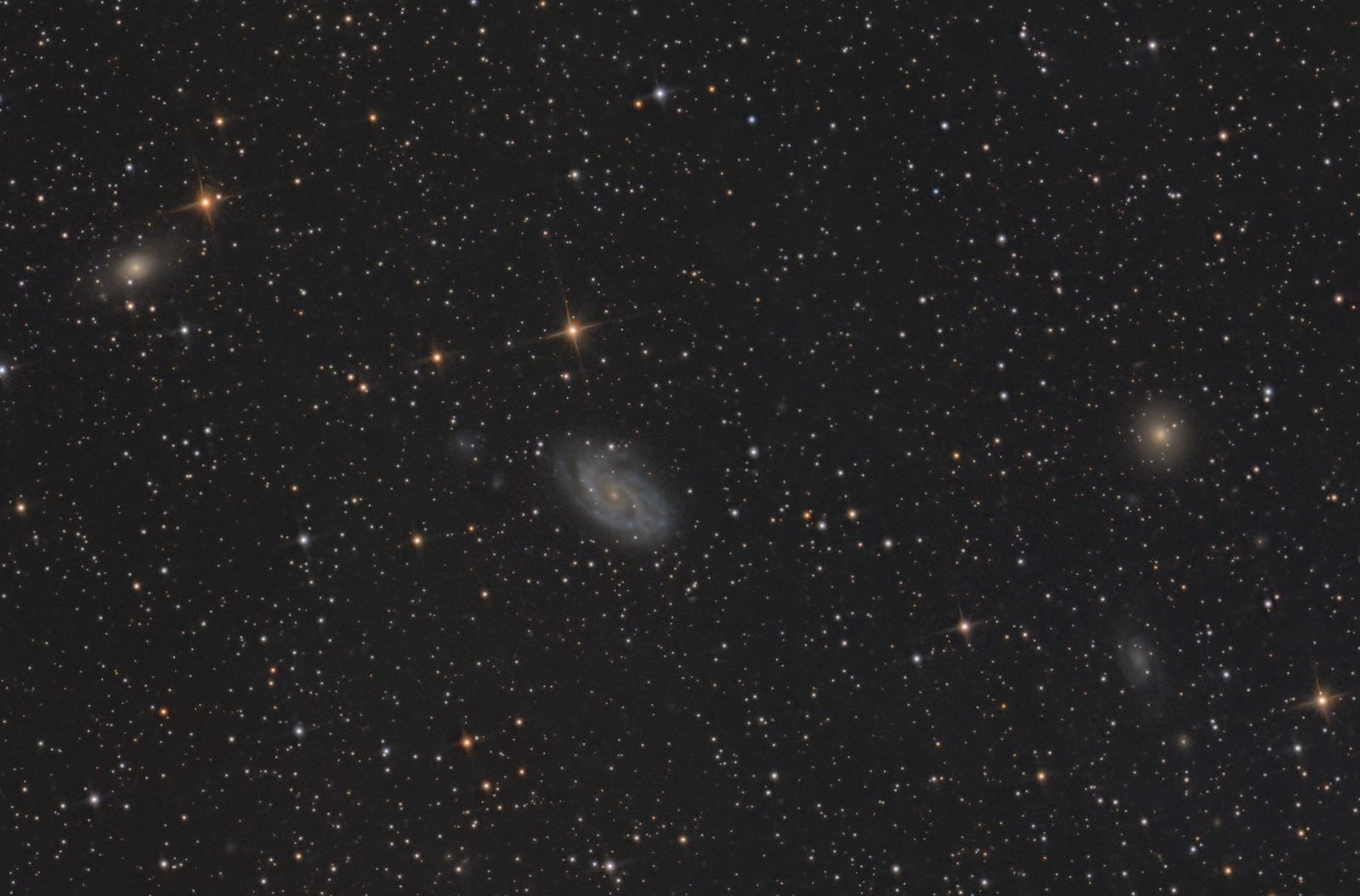
This wide-field mosaic captures the Lagoon and Trifid Nebulae, two prominent star-forming regions in the constellation Sagittarius, located roughly 4,000–5,000 light-years from Earth. The Lagoon Nebula (M8), visible toward the lower right, is an active region of star birth marked by glowing hydrogen gas, dark dust lanes, and embedded young star clusters. Above it lies the Trifid Nebula (M20), a complex object combining emission, reflection, and dark nebulae within a single field.

The surrounding region is rich in faint emission and dust, including the H II region Sharpless 2-54, sometimes referred to as the “Chinese Dragon,” along with extensive dark molecular clouds that thread through the Sagittarius arm of the Milky Way. The dense star field reflects the direction of the Galactic center, with stars spanning a wide range of distances and colors.

The image was assembled as a four-panel mosaic using a fast wide-field optical system, allowing both the nebulae and the surrounding stellar environment to be captured at high resolution while preserving natural star color and fine structural detail across the field.

This wide-field mosaic captures the Lagoon and Trifid Nebulae, two prominent star-forming regions in the constellation Sagittarius, located roughly 4,000–5,000 light-years from Earth. The Lagoon Nebula (M8), visible toward the lower right, is an active region of star birth marked by glowing hydrogen gas, dark dust lanes, and embedded young star clusters. Above it lies the Trifid Nebula (M20), a complex object combining emission, reflection, and dark nebulae within a single field.

The surrounding region is rich in faint emission and dust, including the H II region Sharpless 2-54, sometimes referred to as the “Chinese Dragon,” along with extensive dark molecular clouds that thread through the Sagittarius arm of the Milky Way. The dense star field reflects the direction of the Galactic center, with stars spanning a wide range of distances and colors.

The image was assembled as a four-panel mosaic using a fast wide-field optical system, allowing both the nebulae and the surrounding stellar environment to be captured at high resolution while preserving natural star color and fine structural detail across the field.

This wide-field mosaic captures the Lagoon and Trifid Nebulae, two prominent star-forming regions in the constellation Sagittarius, located roughly 4,000–5,000 light-years from Earth. The Lagoon Nebula (M8), visible toward the lower right, is an active region of star birth marked by glowing hydrogen gas, dark dust lanes, and embedded young star clusters. Above it lies the Trifid Nebula (M20), a complex object combining emission, reflection, and dark nebulae within a single field.

The surrounding region is rich in faint emission and dust, including the H II region Sharpless 2-54, sometimes referred to as the “Chinese Dragon,” along with extensive dark molecular clouds that thread through the Sagittarius arm of the Milky Way. The dense star field reflects the direction of the Galactic center, with stars spanning a wide range of distances and colors.

The image was assembled as a four-panel mosaic using a fast wide-field optical system, allowing both the nebulae and the surrounding stellar environment to be captured at high resolution while preserving natural star color and fine structural detail across the field.

This wide-field mosaic captures the Lagoon and Trifid Nebulae, two prominent star-forming regions in the constellation Sagittarius, located roughly 4,000–5,000 light-years from Earth. The Lagoon Nebula (M8), visible toward the lower right, is an active region of star birth marked by glowing hydrogen gas, dark dust lanes, and embedded young star clusters. Above it lies the Trifid Nebula (M20), a complex object combining emission, reflection, and dark nebulae within a single field.

The surrounding region is rich in faint emission and dust, including the H II region Sharpless 2-54, sometimes referred to as the “Chinese Dragon,” along with extensive dark molecular clouds that thread through the Sagittarius arm of the Milky Way. The dense star field reflects the direction of the Galactic center, with stars spanning a wide range of distances and colors.

The image was assembled as a four-panel mosaic using a fast wide-field optical system, allowing both the nebulae and the surrounding stellar environment to be captured at high resolution while preserving natural star color and fine structural detail across the field.

This wide-field mosaic captures the Lagoon and Trifid Nebulae, two prominent star-forming regions in the constellation Sagittarius, located roughly 4,000–5,000 light-years from Earth. The Lagoon Nebula (M8), visible toward the lower right, is an active region of star birth marked by glowing hydrogen gas, dark dust lanes, and embedded young star clusters. Above it lies the Trifid Nebula (M20), a complex object combining emission, reflection, and dark nebulae within a single field.

The surrounding region is rich in faint emission and dust, including the H II region Sharpless 2-54, sometimes referred to as the “Chinese Dragon,” along with extensive dark molecular clouds that thread through the Sagittarius arm of the Milky Way. The dense star field reflects the direction of the Galactic center, with stars spanning a wide range of distances and colors.

The image was assembled as a four-panel mosaic using a fast wide-field optical system, allowing both the nebulae and the surrounding stellar environment to be captured at high resolution while preserving natural star color and fine structural detail across the field.

This wide-field mosaic captures the Lagoon and Trifid Nebulae, two prominent star-forming regions in the constellation Sagittarius, located roughly 4,000–5,000 light-years from Earth. The Lagoon Nebula (M8), visible toward the lower right, is an active region of star birth marked by glowing hydrogen gas, dark dust lanes, and embedded young star clusters. Above it lies the Trifid Nebula (M20), a complex object combining emission, reflection, and dark nebulae within a single field.

The surrounding region is rich in faint emission and dust, including the H II region Sharpless 2-54, sometimes referred to as the “Chinese Dragon,” along with extensive dark molecular clouds that thread through the Sagittarius arm of the Milky Way. The dense star field reflects the direction of the Galactic center, with stars spanning a wide range of distances and colors.

The image was assembled as a four-panel mosaic using a fast wide-field optical system, allowing both the nebulae and the surrounding stellar environment to be captured at high resolution while preserving natural star color and fine structural detail across the field.

This *wide-field* _mosaic_ captures the Lagoon and Trifid Nebulae, two prominent star-forming regions in the constellation Sagittarius, located roughly 4,000–5,000 light-years from Earth. The Lagoon Nebula (M8), visible toward the lower right, is an active region of star birth marked by glowing hydrogen gas, dark dust lanes, and embedded young star clusters. Above it lies the Trifid Nebula (M20), a complex object combining emission, reflection, and dark nebulae within a single field. The surrounding region is rich in faint emission and dust, including the H II region Sharpless 2-54, sometimes referred to as the “Chinese Dragon,” along with extensive dark molecular clouds that thread through the Sagittarius arm of the Milky Way. The dense star field reflects the direction of the Galactic center, with stars spanning a wide range of distances and colors. The image was assembled as a four-panel mosaic using a fast wide-field optical system, allowing both the nebulae and the surrounding stellar environment to be captured at high resolution while preserving natural star color and fine structural detail across the field. This wide-field mosaic captures the Lagoon and Trifid Nebulae, two prominent star-forming regions in the constellation Sagittarius, located roughly 4,000–5,000 light-years from Earth. The Lagoon Nebula (M8), visible toward the lower right, is an active region of star birth marked by glowing hydrogen gas, dark dust lanes, and embedded young star clusters. Above it lies the Trifid Nebula (M20), a complex object combining emission, reflection, and dark nebulae within a single field. The surrounding region is rich in faint emission and dust, including the H II region Sharpless 2-54, sometimes referred to as the “Chinese Dragon,” along with extensive dark molecular clouds that thread through the Sagittarius arm of the Milky Way. The dense star field reflects the direction of the Galactic center, with stars spanning a wide range of distances and colors. The image was assembled as a four-panel mosaic using a fast wide-field optical system, allowing both the nebulae and the surrounding stellar environment to be captured at high resolution while preserving natural star color and fine structural detail across the field. This wide-field mosaic captures the Lagoon and Trifid Nebulae, two prominent star-forming regions in the constellation Sagittarius, located roughly 4,000–5,000 light-years from Earth. The Lagoon Nebula (M8), visible toward the lower right, is an active region of star birth marked by glowing hydrogen gas, dark dust lanes, and embedded young star clusters. Above it lies the Trifid Nebula (M20), a complex object combining emission, reflection, and dark nebulae within a single field. The surrounding region is rich in faint emission and dust, including the H II region Sharpless 2-54, sometimes referred to as the “Chinese Dragon,” along with extensive dark molecular clouds that thread through the Sagittarius arm of the Milky Way. The dense star field reflects the direction of the Galactic center, with stars spanning a wide range of distances and colors. The image was assembled as a four-panel mosaic using a fast wide-field optical system, allowing both the nebulae and the surrounding stellar environment to be captured at high resolution while preserving natural star color and fine structural detail across the field. This wide-field mosaic captures the Lagoon and Trifid Nebulae, two prominent star-forming regions in the constellation Sagittarius, located roughly 4,000–5,000 light-years from Earth. The Lagoon Nebula (M8), visible toward the lower right, is an active region of star birth marked by glowing hydrogen gas, dark dust lanes, and embedded young star clusters. Above it lies the Trifid Nebula (M20), a complex object combining emission, reflection, and dark nebulae within a single field. The surrounding region is rich in faint emission and dust, including the H II region Sharpless 2-54, sometimes referred to as the “Chinese Dragon,” along with extensive dark molecular clouds that thread through the Sagittarius arm of the Milky Way. The dense star field reflects the direction of the Galactic center, with stars spanning a wide range of distances and colors. The image was assembled as a four-panel mosaic using a fast wide-field optical system, allowing both the nebulae and the surrounding stellar environment to be captured at high resolution while preserving natural star color and fine structural detail across the field. This wide-field mosaic captures the Lagoon and Trifid Nebulae, two prominent star-forming regions in the constellation Sagittarius, located roughly 4,000–5,000 light-years from Earth. The Lagoon Nebula (M8), visible toward the lower right, is an active region of star birth marked by glowing hydrogen gas, dark dust lanes, and embedded young star clusters. Above it lies the Trifid Nebula (M20), a complex object combining emission, reflection, and dark nebulae within a single field. The surrounding region is rich in faint emission and dust, including the H II region Sharpless 2-54, sometimes referred to as the “Chinese Dragon,” along with extensive dark molecular clouds that thread through the Sagittarius arm of the Milky Way. The dense star field reflects the direction of the Galactic center, with stars spanning a wide range of distances and colors. The image was assembled as a four-panel mosaic using a fast wide-field optical system, allowing both the nebulae and the surrounding stellar environment to be captured at high resolution while preserving natural star color and fine structural detail across the field. This wide-field mosaic captures the Lagoon and Trifid Nebulae, two prominent star-forming regions in the constellation Sagittarius, located roughly 4,000–5,000 light-years from Earth. The Lagoon Nebula (M8), visible toward the lower right, is an active region of star birth marked by glowing hydrogen gas, dark dust lanes, and embedded young star clusters. Above it lies the Trifid Nebula (M20), a complex object combining emission, reflection, and dark nebulae within a single field. The surrounding region is rich in faint emission and dust, including the H II region Sharpless 2-54, sometimes referred to as the “Chinese Dragon,” along with extensive dark molecular clouds that thread through the Sagittarius arm of the Milky Way. The dense star field reflects the direction of the Galactic center, with stars spanning a wide range of distances and colors. The image was assembled as a four-panel mosaic using a fast wide-field optical system, allowing both the nebulae and the surrounding stellar environment to be captured at high resolution while preserving natural star color and fine structural detail across the field. This wide-field mosaic captures the Lagoon and Trifid Nebulae, two prominent star-forming regions in the constellation Sagittarius, located roughly 4,000–5,000 light-years from Earth. The Lagoon Nebula (M8), visible toward the lower right, is an active region of star birth marked by glowing hydrogen gas, dark dust lanes, and embedded young star clusters. Above it lies the Trifid Nebula (M20), a complex object combining emission, reflection, and dark nebulae within a single field. The surrounding region is rich in faint emission and dust, including the H II region Sharpless 2-54, sometimes referred to as the “Chinese Dragon,” along with extensive dark molecular clouds that thread through the Sagittarius arm of the Milky Way. The dense star field reflects the direction of the Galactic center, with stars spanning a wide range of distances and colors. The image was assembled as a four-panel mosaic using a fast wide-field optical system, allowing both the nebulae and the surrounding stellar environment to be captured at high resolution while preserving natural star color and fine structural detail across the field.

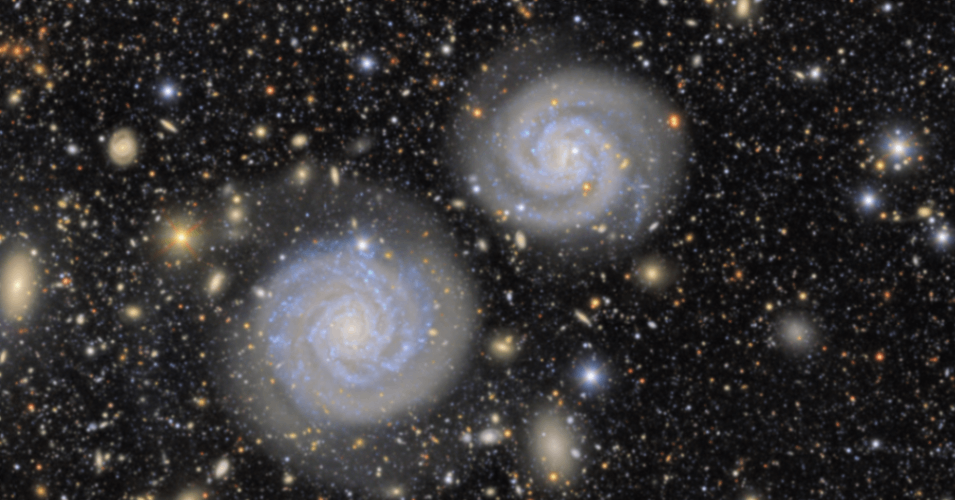
PGC46502 and friends

PGC46502 and friends

Recent Threads