
01Free
Essential
A clean starting point for well-behaved linear data and everyday restoration.
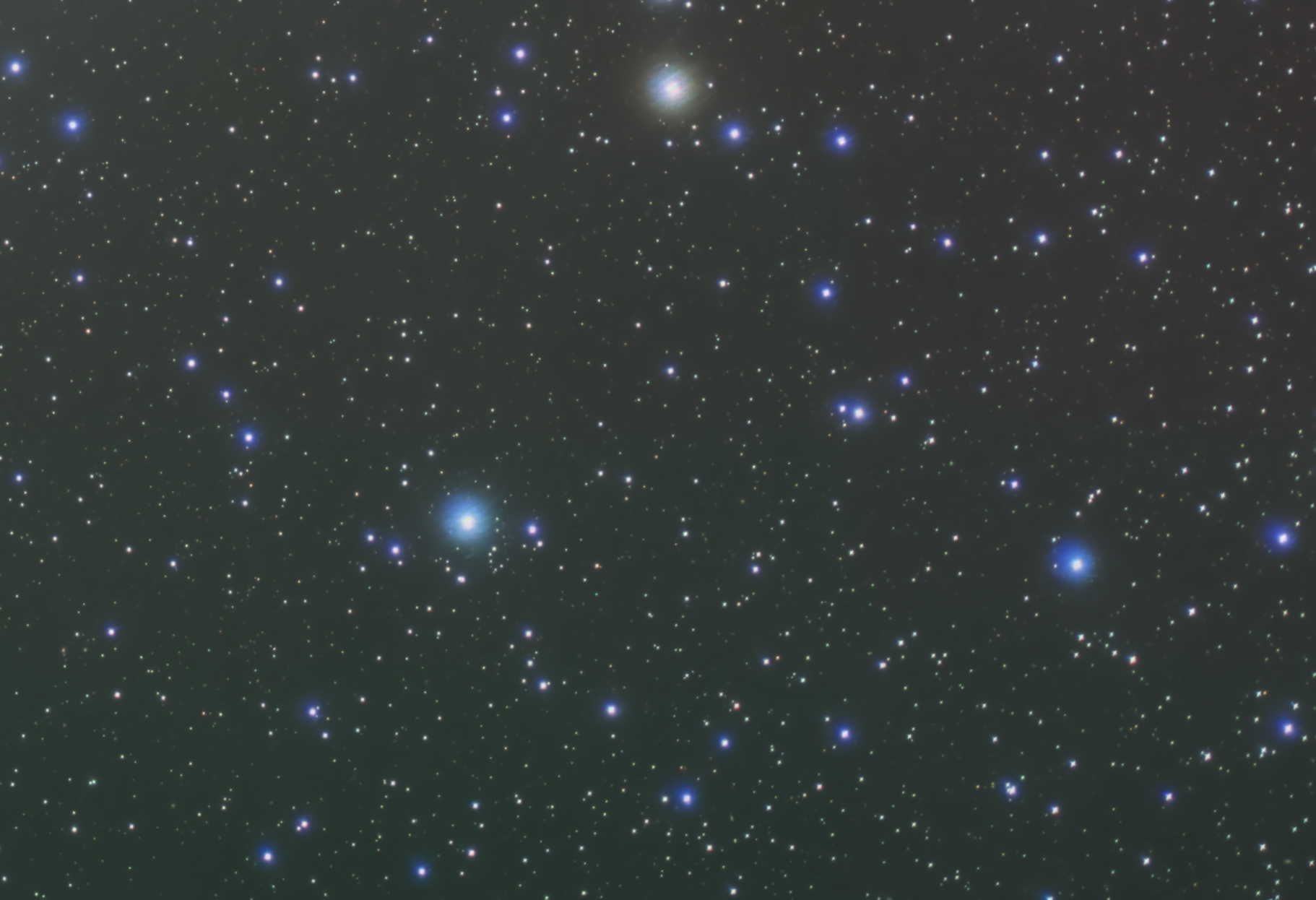
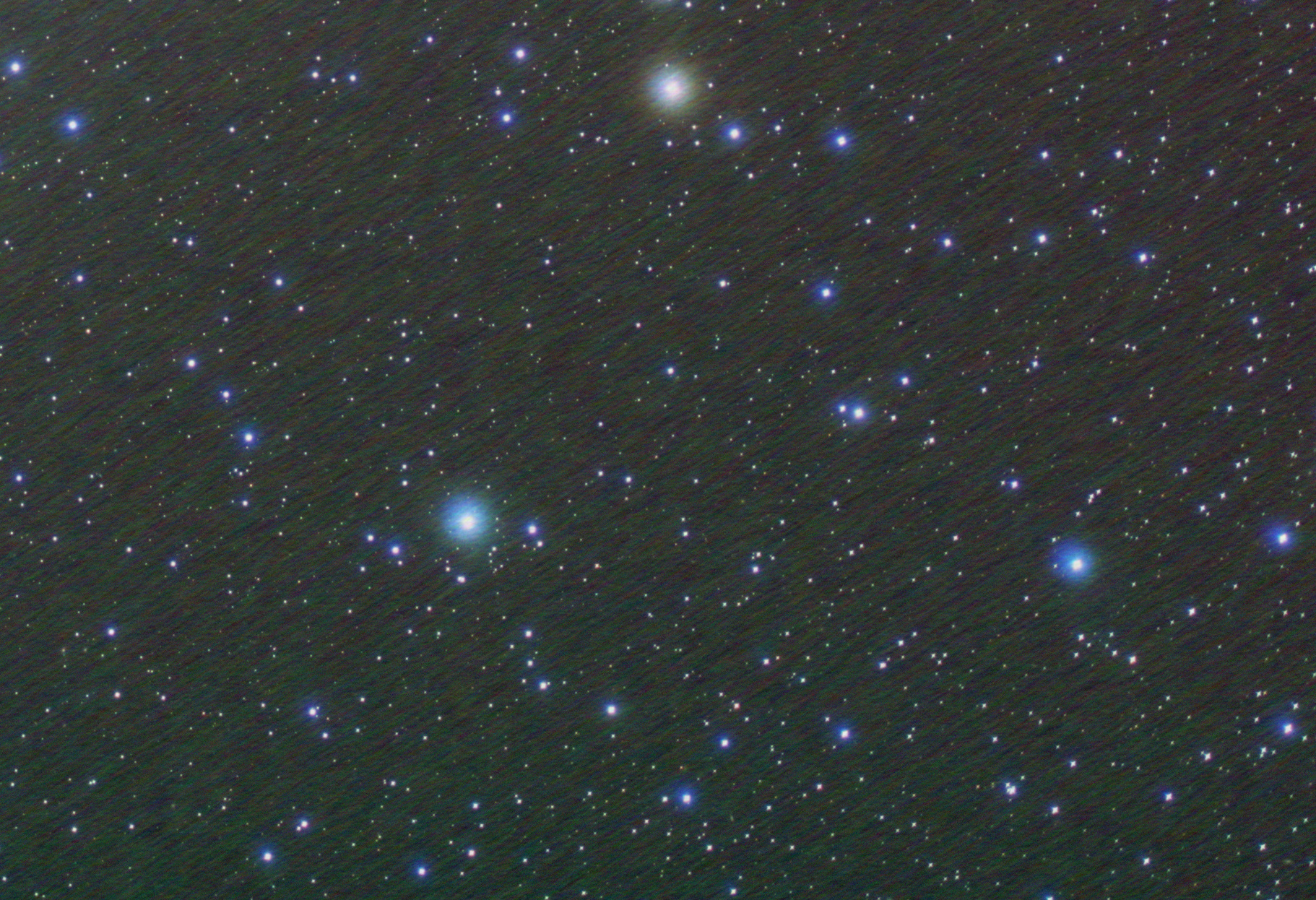
Scroll to watch DeepPrism separate correlated acquisition noise from the astronomical signal already recorded by the sensor.
DeepPrism V2 is a family of local neural models trained specifically around the way astronomical data behaves: weak photon signal, colour-dependent sensor noise, stellar profiles, diffuse structures and correlated patterns left behind by acquisition and stacking.
Its proprietary Physics-Informed Astronomical Denoising Network (PIAD-Net) evaluates native and stretched representations together with robust image statistics. Corrections are derived from the recorded data; the model is designed to reduce noise without changing the image into a generic visual style.
A clean starting point for well-behaved linear data and everyday restoration.
More contextual analysis for moderate noise, colour variation and finer structures.
A deeper profile for severe noise, directional residuals and regular full-resolution work.
The largest contextual profile for difficult data where faint signal is close to the background floor.
Drag the demarcation line. DeepPrism removes heavy stochastic noise and walking-noise patterns while protecting faint astronomical signal, stellar profiles and colour relationships down to the sensor floor.


Ultra is the everyday flagship: a highly efficient implementation of PIAD-Net designed to analyse complex noise without turning every full-resolution image into an overnight job.
Max is the no-compromise profile. Its deeper contextual field examines relationships across the image before deciding what belongs to the sky and what belongs to the noise—ideal for faint structures, difficult acquisitions and final-quality masters.
Every profile shares the same physics-informed PIAD-Net principles.
Advanced, Ultra and Max are included together—no tiered purchase decision.
Your image remains on your machine throughout inference.
Diagonal bands, row and column patterns, field correlation, hot-pixel trails and sub-pixel drift do not behave like ordinary random noise. DeepPrism was trained to recognise that motion-shaped signature instead of merely softening it.
Walking-noise suppression is a dedicated part of DeepPrism V2 training, not a general denoising preset applied after the fact.
Ultra is conditioned against severe directional noise, sensor-field patterns, drift and imperfect rejection. It removes the visible path of the noise while protecting stellar profiles and keeping processing practical for everyday full-resolution work.
Max expands the contextual field and checks faint structures across multiple scales before making a correction. It is designed for the hardest cases—where walking noise overlaps dim dust, crowded star fields or signal close to the background floor.
Drag the divider to compare the same field before and after DeepPrism processing
DeepPrism evaluates calibrated values in their native domain and a linked signed-asinh representation used to expose low-level structure. The stretched view is not clipped at the preview black point, so gradients below the visible background remain part of the optimisation.
Image-wide statistics—linked median, lower-side noise estimate and high percentile—are measured before tiling. They give every tile the same global reference, reducing local decisions that would otherwise vary across a large mosaic.
The training objective treats luminance, colour, stellar profiles, diffuse signal and background residuals separately. It also penalises unsupported peaks, blur and changes to bright-star colour. These constraints do not prove that every correction is perfect; they make the intended behaviour explicit and testable.
Floating-point pixel values remain in the input domain. DeepPrism does not apply a generic 0–1 normalisation or output clip.
A shared signed-asinh transform exposes low-contrast gradients without changing the colour relationship between channels.
Robust statistics are sampled from the full image before padding and passed to the inference graph with every tile.
The predicted image is assembled with overlapping tiles and written without clipping, ready for the next step in the processing chain.
These are implementation details of the current Ultra model distributed by SyQon. They describe how the model runs; they are not image-quality scores.
A mono image is replicated across the three input channels with an explicit mono flag, then collapsed by channel mean after inference.
The shipped graph is checked against its source implementation for finite output, shape handling and numerical equivalence before release.
The model and its runtime are installed on the workstation. Source images, intermediate tiles and outputs are not sent to SyQon.
Rather than drawing diagonal lines over clean images, the training pipeline models a sensor-fixed residual and moves the sky across it over a virtual exposure sequence.
Offset fixed-pattern noise, row and column correlation, hot and cold residuals, shared channel components and signal-dependent PRNU.
Variable drift, jitter, periodic tracking error, small field rotation, exposure weighting and temporal amplitude across a simulated stack.
Weighted mean or sigma rejection, including no-dither and insufficient-dither cases. Noise is not artificially renormalised after stacking.
Native and stretched validation are evaluated together, with tail errors and the weaker domain contributing to model selection.
Scope note: the simulator is physically motivated, not a calibration model for every camera or stacking program. It cannot reproduce every demosaic, drizzle or rejection pipeline. Results should therefore be assessed on the user’s own data; the interactive comparisons on this page show specific examples, not a guarantee for every acquisition.
One DeepPrism V2 license unlocks Studio, CLI and every supported integration on every platform. Essential remains free; Advanced, Ultra and Max are included with this universal license.
Querying licensing server...
Essential is free. The three-day trial enables Advanced, Ultra and Max without uploading image data.