
Restoration that evaluates its next move.
A new approach to astronomical deblurring. PLXNet restores the image. A learned corrector proposes finer detail. AADR assesses each next step and decides which result to keep.
A shift in how restoration works
Restoration becomes a sequence of informed choices. AADR brings together a model that restores, a corrector that proposes and assessors that judge the estimated benefit. The original observation stays in view throughout the process.
The system can accept a supported refinement, keep the last accepted result or preserve the input. This decision layer makes the path from observation to output explicit, while giving the corrector room to work on structures at different scales.
See the restoration. Inspect the error.
Explore nebular structure, planetary detail and fields containing stars. Each comparison shows the original observation, the selected restoration and its reference. Inspect the image as a whole or zoom into the same region across all panels.
Follow the fine structure.
Compare the diffuse input with the restored filaments and transitions. The reference and difference map let you inspect both recovered structure and residual differences.
Full 512 × 512 tile. Open any panel to inspect the native image.
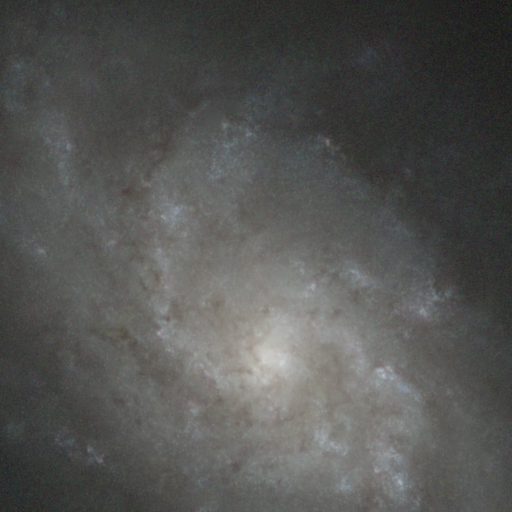
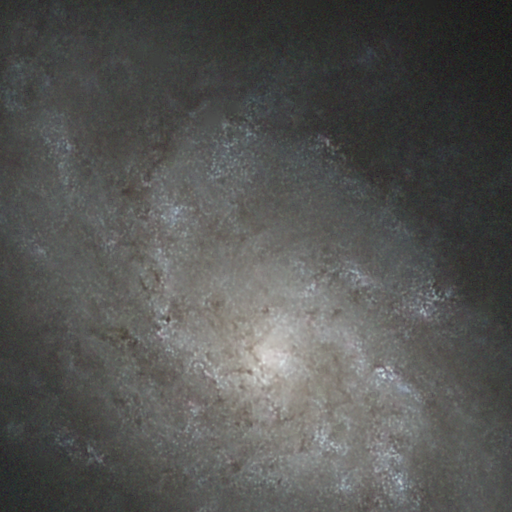
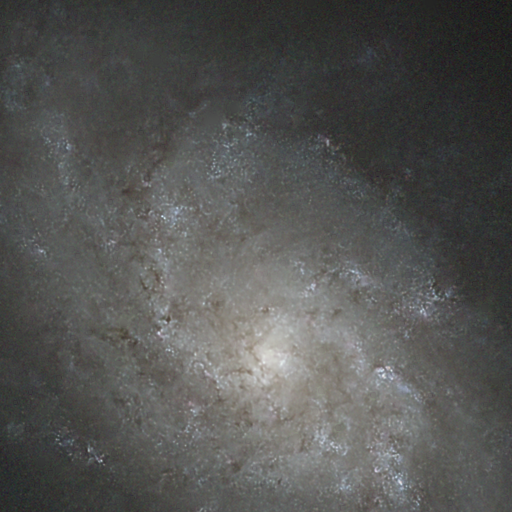
All panels use the same display mapping. The result shown is the selected output; adaptive assessment can retain the initial PLXNet restoration or accept a further correction.
Where the result still differs from the target
The difference map makes residual detail visible. Dark regions are closer to the reference; bright regions show a larger difference. Contrast is amplified here to reveal subtle deviations, while the image panels above retain their shared display mapping.
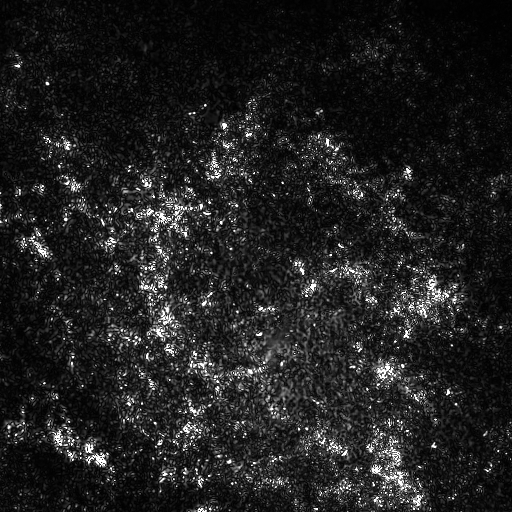
Read the map alongside the restored image and reference to inspect where fine structure, intensity or stellar profiles still differ. Each example has its own display scale.
Three roles. One restoration process.
PLXNet restores
The restoration backbone produces the first deblurred image. It provides the foundation against which each proposed refinement is assessed.
The corrector refines
A compact multiscale network sees both the original observation and the preceding result. It proposes a residual correction, combining local detail with wider spatial context.
AADR chooses
Three assessors estimate the errors and improvement between candidates. Their agreement and calibrated acceptance margins guide the controller’s next action.
The corrector combines several spatial resolutions with dilated context. Fine structures and their surroundings contribute to the proposed change. Each correction is added to the preceding result, keeping the restoration process anchored to the image already under assessment.
Detail belongs in context.
A sharp edge is only one part of an astronomical image. AADR’s assessment also considers pixel fidelity, local structure, compact stars and colour balance. These signals help distinguish an estimated useful correction from a change that merely looks stronger.
Pixel fidelity
Every spatial comparison stays on the original pixel grid. The restoration objective values correspondence with the reference, including small structures and subtle differences.
Fine structure
Local detail and gradients at multiple scales guide the corrector toward target-matched filaments, transitions and texture.
Stellar preservation
For the task illustrated here, compact stars shared by the observation and reference are features to preserve while restoring extended signal.
Colour and brightness
Channel bias contributes to assessment. The image is processed without automatic per-image colour or brightness normalization.
The assessors estimate these quantities during inference. The original image remains available to the corrector and controller, and each proposed refinement is evaluated against the accepted result.
Choose the next step.
AADR compares the estimated benefit of a candidate with a calibrated margin and the disagreement between assessors. Explore the three possible paths through the system.
Conceptual examples of the decision process.
A correction earns its place.
The corrector proposes a change. When the assessors estimate a sufficiently supported improvement, the controller accepts it and can evaluate another refinement. Each accepted step becomes the new reference for the next decision.
- 01Restore with PLXNet
- 02Propose a correction
- 03Assess the estimated gain
- 04Keep the supported refinement
Assessment is based on learned estimates. A change can be rejected even when its error against a known reference is lower, because the estimated improvement does not meet the acceptance margin. The controller’s role is to make that choice explicit.
Many regions. One coherent image.
Full-resolution images are processed through overlapping regions with surrounding context. Residuals are blended across those overlaps, and the original image is added once. The same process extends to the image borders.
Local decisions contribute to a spatial map across the image. Neighbourhood coordination can reduce isolated refinements relative to the PLXNet baseline, moderating abrupt changes in correction strength. Rejected refinements are not increased by this coordination step.
Context
Each region includes its surroundings.
Overlap
Neighbouring predictions contribute to shared pixels.
Coordination
A shared map moderates isolated refinements.
Coming to the next generation of Parallax.
PLXNet and AADR will be available in the next generation, Parallax V2. Adaptive refinement will be an optional part of its restoration workflow, with visible processing decisions and 16-bit TIFF output.
PLXNet + AADR
Restoration, correction and assessment come together in the next generation of astronomical image processing. This technology is planned for Parallax V2 and is not included in the current Parallax release.